
There are a lot of opinions on when to start bringing a child or infant to get fitted. Some babies as young as a few weeks to a few months have been fitted. As a parent, it may sound daunting to start that young.
Going to an ocularist this young can play an important role in supporting the growth of the eye socket and surrounding facial structures. During infancy, the bones around the eye grow rapidly. If an eye is absent or very small, the socket may not receive enough stimulation and the eyelids can remain small or the orbital bones may grow less than the unaffected side. Over time, this can lead to facial asymmetry. A conformer or prosthetic eye helps provide volume within the socket, encouraging more typical growth of the surrounding tissues. Many structures can be supported by this socket volume including eyelids, brows, and cheekbones. This can improve symmetry as your child grows. Ocularists often begin with a tiny conformer, a clear plastic shell, and gradually replace it with slightly larger ones over time. This gentle, gradual expansion helps stretch the eyelids and deepen the socket.
Many children learn to tolerate their shell but the beginning, comfort may vary. Specialists such as those at the Children’s Hospital of Philadelphia, Rady Children's Hospital Ophthalmology, and the Shiley Eye Institute at UC San Diego Health can perform a thorough examination to check the health of your child’s eye and determine next steps such as if surgical intervention or other treatments may be necessary.
At the ocularist appointment, there are a few things you can do to put your baby or child at ease:
Ask for extra time. Request a longer visit and allow time for the eye to rest from irritation of the socket.
Try anesthetic eye drops at the ocularist office in the affected eye(s) if needed for those with sensitive eyes. Pain or discomfort during a fitting can provide useful information such as rubbing, sizing issues or shell surface areas in need of buffing. Typically, those areas of discomfort can still be noticeable with the anesthetic drops. Test out what works best for your child. Using lubricant can be an alternative for those with less sensitive sockets.
If your child is older, explain the visit ahead of time. Ask the ocularist for photos or a short video of what will happen.
Bring comfort items.
Bring an eye patch or sunglasses if your child is shy or self conscious.
Ask your child if they would prefer the ocularist explain each step.
Have your child fed and napped before the appointment.
As your child gets older, allow he/she to advocate for themselves and speak up so they can build confidence over their appearance and choices.
And remember, you have a support network with ICAN. Feel free to reach out to us or the community if you have any questions.
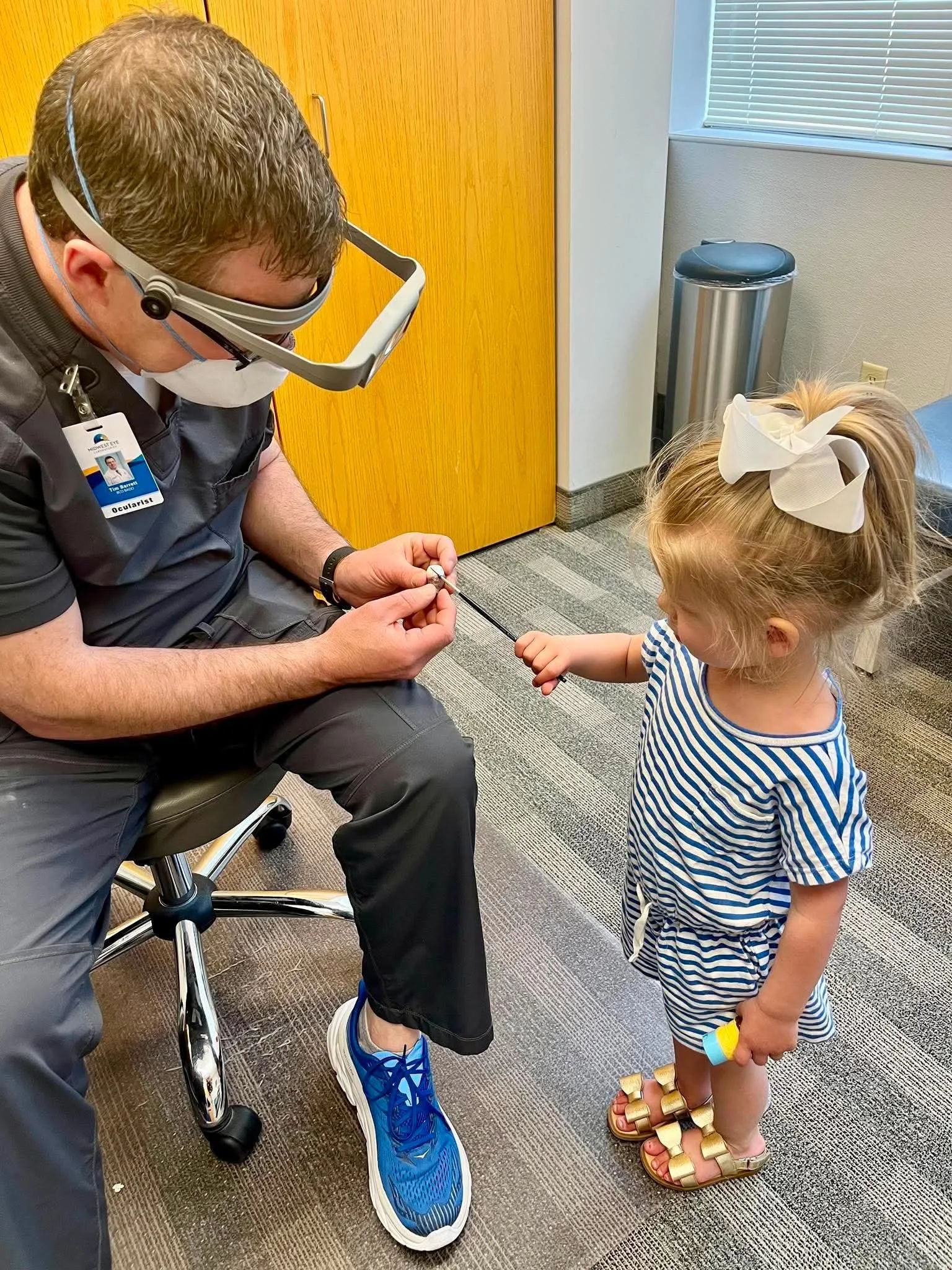
Photo of Timothy J. Barrett BCO BADO from Midwest Eye Laboratories conducting a fitting with an ICAN child.
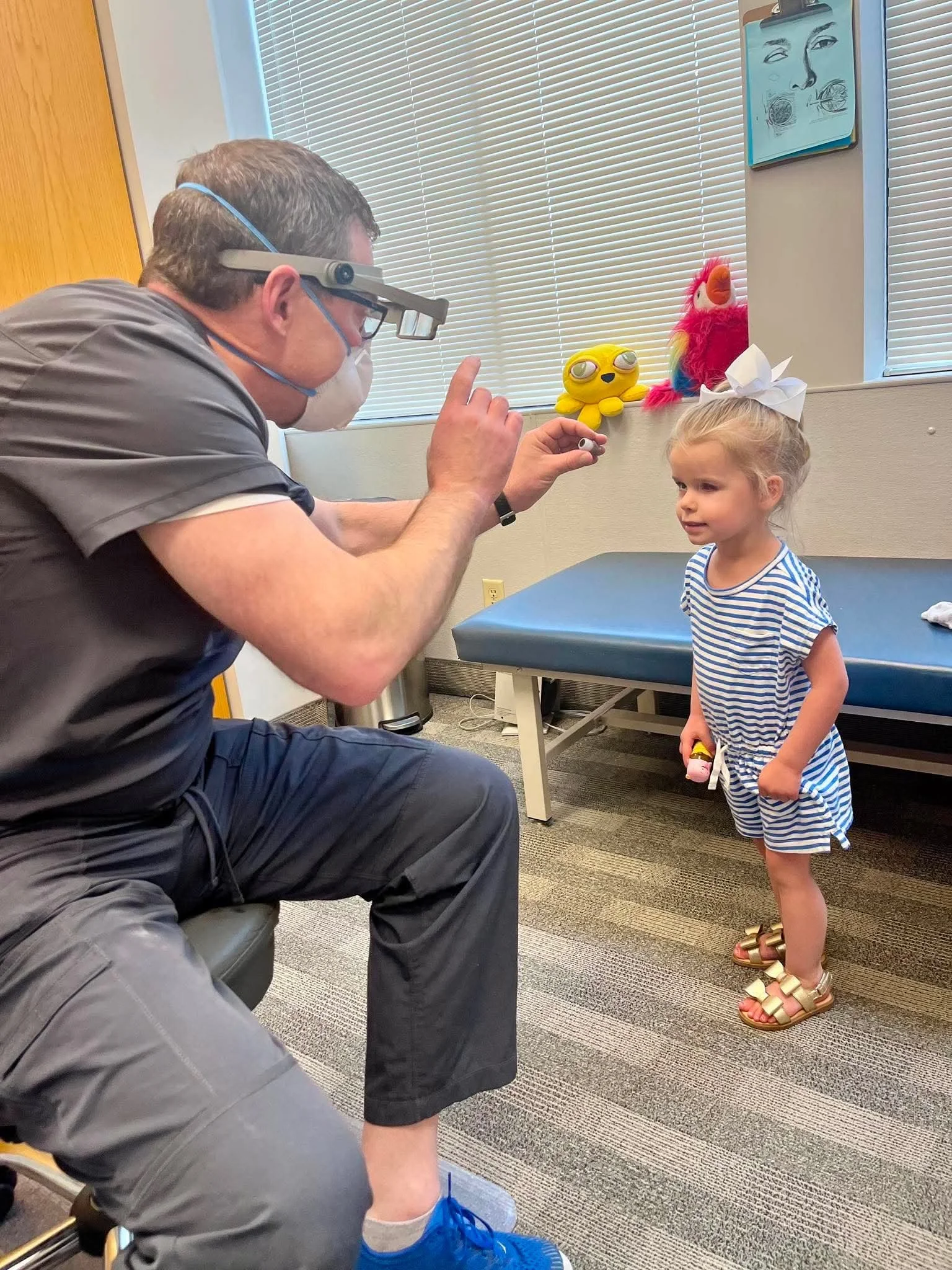
Photo of Timothy J. Barrett BCO BADO from Midwest Eye Laboratories conducting a fitting with an ICAN child.