Maybe you’re reading this from a hospital room. Maybe you’ve just brought your baby home, and in the quiet moments between feedings and diaper changes, your mind is racing with questions. Or maybe it’s 2 AM, and you’ve found yourself searching the internet for bilateral anophthalmia, trying to understand what this diagnosis means for your baby and for your family.
If so, there is something I want you to know first: You are not alone.
I’ve been where you are. When my daughter Stella was born, she was quickly taken to the NICU. Suddenly, my husband and I were surrounded by specialists, medical terminology, urgent questions, and very few clear answers. We eventually learned that Stella had been born with bilateral anophthalmia due to SOX2 syndrome.
Those first days and weeks were disorienting and surreal. I was trying to absorb information I had never expected to need while also trying to simply be a mother to my new baby. I wanted answers. I wanted someone to tell me what Stella’s future would look like. I wanted to know what I was supposed to do next.
If that’s where you are right now, I want to offer you something I couldn’t fully understand then: You do not have to figure out your child’s whole future today.
Give Yourself Permission to Feel What You Feel
A diagnosis of bilateral anophthalmia (BA) can bring emotions you weren’t expecting. You may feel grief. Fear. Confusion. Anger. Numbness. Relief at finally having an answer. Love so enormous it almost hurts. You may feel several of these things before breakfast. Whatever you are feeling right now is okay.
Remember to take care of yourself, too. Talk with a trusted friend or family member, someone who can simply listen. Rest when you can, accept help when it’s offered, and remember that caring for yourself is part of caring for your baby. You don’t have to carry every feeling, question, and worry on your own.
You Don’t Need to Understand the Whole Future Today
One of the hardest things about receiving an unexpected diagnosis is how quickly your mind races ahead. Will my child walk? Will they talk? What will school look like? Will they make friends? Will they be independent? Will they be happy?
I remember those questions. And one of the most difficult realities is that your doctors may not be able to answer all of them. Even with a diagnosis, there can be enormous uncertainty about what your individual child’s development will look like. You may hear the words “wait and see” more often than you would like.
But eventually I learned something important: I didn’t need to know Stella’s entire future to parent the child who was right in front of me. There was plenty to do today: hold her, talk to her, learn what comforted her, ask the next question, go to the next appointment, and sometimes, just breathe. As you take each next step, trust the right pathway to unfold for your child and your family.
Get to Know Your Baby, Not Just the Diagnosis
In those early weeks, a diagnosis can become enormous. It can occupy every conversation and every thought. But your baby is still your baby.
One of the most meaningful things I began to discover was how Stella experienced and connected with the world. For a child who is blind, touch, sound, scent, and movement become especially important pathways for connection and exploration. I remember singing softly to Stella during a hospital stay and rubbing small circles on her back. Her body began to relax against mine. In that moment, amid the monitors and worry, it was simply the two of us, connected through touch, sound, and presence.
You don’t need special equipment to begin connecting with your baby. Talk to them. Sing. Hold them. Let them hear your familiar voice and feel your touch. Notice what makes them relax. Notice what makes them curious. You are beginning to learn your child’s language, and your child is beginning to learn yours.
Start Gathering Your People
You don’t have to carry all of this by yourself. In the beginning, support can be as simple as letting someone bring dinner, asking a family member to help with an older child, or having a friend you can call when you need someone to listen without trying to fix anything.
And when you’re ready, look for other parents. Professionals bring expertise, but other parents bring a different kind of understanding. There is comfort in talking with someone who already knows some of the questions, fears, appointments, and unexpected joys that can come with raising a child who is blind. Finding even one person who knows this road can make it feel less lonely.
Keep Notes—You’ll Be Glad You Did
The first months can bring a lot of appointments, new terminology, referrals, recommendations, and conversations. When you’re tired and trying to process so much emotionally, it can be surprisingly difficult to remember who said what.
I recommend keeping a notebook, binder, or digital file dedicated to your child’s care. Write down questions as they occur to you so you have them ready for the next appointment. Keep notes from visits, names and contact information for providers, test results, recommendations, referrals, and anything you need to follow up on. Having everything in one place can make the growing amount of information feel a little more manageable.
If possible, bring another person to important appointments. A second set of ears can be invaluable. You may also want to record conversations with providers so you can listen again later. Ask the provider for permission before recording, since policies and applicable laws can vary. If recording isn’t possible, take detailed notes and ask your provider to repeat or explain anything you don’t understand.
Most importantly, don’t feel embarrassed about asking questions, even ones that seem basic, or asking the same question again. In those early days, you are learning an entirely new vocabulary while caring for a new baby. You deserve the time you need to understand what is being discussed and decided.
Some Questions You May Be Asking Right Now
What exactly does bilateral anophthalmia mean?
Bilateral anophthalmia means that both eyes failed to develop normally before birth. In true anophthalmia, the eyeballs (globes) and ocular tissue are completely absent, resulting in blindness.
However, anophthalmia and microphthalmia (where an eye develops but is abnormally small) exist along a spectrum, and the distinction is not always obvious from looking at a baby’s eyes. In some children who appear to have no eyes, imaging may reveal small remnants of ocular tissue, sometimes referred to as clinical anophthalmia or severe microphthalmia.
There can also be differences in the development of the optic nerves and other parts of the visual pathway. Some children have absent optic nerves, while others may have small or residual optic-nerve tissue. In cases where some functioning retinal or ocular tissue is present, there may occasionally be some visual response, such as light perception.
There can be different underlying causes, including genetic changes, and some children have other medical or developmental differences as well. Your child’s doctors and, when appropriate, genetic specialists can help you understand what is known about your child specifically.
Will my child walk or talk?
You may desperately want a prediction, and you may not get one. I certainly wanted one. Children with bilateral anophthalmia do not all follow the same developmental path, particularly when other medical or genetic conditions are involved. One of the hardest parts of the beginning can be learning to live with some uncertainty.
How will I bond with my baby if they can’t see me?
Your baby has many ways to know you. Your voice, touch, scent, movement, and familiar routines can all become pathways for connection. Some of my most meaningful early moments with Stella had nothing to do with sight. They came through holding her, singing to her, touching her, and simply being present.
Who should I contact first?
Your child’s needs will determine the specifics, but early care may involve a pediatrician, pediatric ophthalmologist, ocularist, early intervention program, and, when appropriate, a genetic counselor or other specialists. If the number of providers feels overwhelming, ask whether one of them can help serve as a point person for referrals and coordination.
What should I be doing at home?
You do not need to transform your home into a therapy center. Start with your baby. Hold them. Talk and sing to them. Create predictable, comforting routines. Let everyday life offer opportunities for touch, sound, scents, movement, and exploration. As you get to know your child, you will begin discovering what engages and comforts them.
How am I supposed to handle all of this?
One day at a time, and with help. Accept the practical help people offer. Find people who can listen without trying to fix everything. Build relationships with professionals you trust. Connect with other parents who understand. Needing support is not a failure of strength; none of us were meant to do this alone.
Try Not to Measure Your Child Against Someone Else’s Path
There will be milestone charts, developmental timelines, checklists, and other babies the same age. Comparison can creep in before you even realize it.
I eventually had to learn that Stella’s path was Stella’s. Progress might look different. It might arrive on a different timeline. And sometimes the milestones that meant the most to us were things another family might barely notice: a response to a familiar voice, curiosity about a new sound, a new movement, a belly laugh, a small step toward independence.
The timeline you imagined before your baby arrived may change. That does not mean your child’s life will be without growth, adventure, connection, or joy. It means you are learning to walk your child’s path, rather than someone else’s.
For Today, One Step Is Enough
There will be time to learn the terminology. There will be appointments and questions. There will be people to meet, resources to discover, skills to learn, and decisions to make. But you don’t need to do all of that today.
Maybe today you write down three questions for the next appointment. Maybe you reach out to another parent. Maybe you put your phone away and hold your baby. Maybe you let someone else make dinner. Maybe you cry. Maybe you laugh at something your baby does and then feel surprised that laughter is possible already. All of that can belong here.
~
Stella is older now, and when I look back at those frightened early days, I wish I could tell that younger version of myself how much life was waiting for us. Not a life without challenges or uncertainty, but a life filled with learning, music, laughter, accomplishments, ordinary family moments, and experiences I could not yet imagine.
I couldn’t see the whole road then. You probably can’t see yours either. You don’t need to.
Love the child in front of you. Ask the next question. Accept the next helping hand. Notice the next small wonder. And when tomorrow comes, take the next step.
About the Author
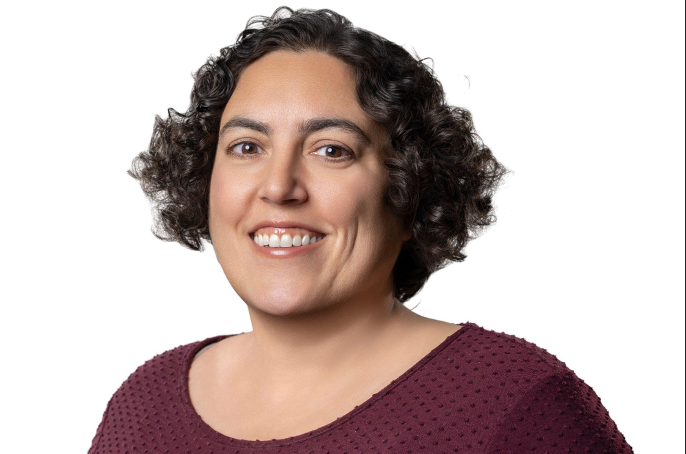
Pauline is the mother of Stella, who was born in 2008 with bilateral anophthalmia (BA) as a result of SOX2 syndrome. Her experiences raising Stella have given her a new and richer way of experiencing the world, deeper mindfulness of the present moment, appreciation for the resilience of children, and joy that can be found in a journey that looks different from the one expected. Pauline has spent 20+ years working in education and loves time in nature and singing with her community choir. Through her writing, Pauline hopes to offer other parents the practical support, encouragement, and sense of connection that meant so much to her in the early years.